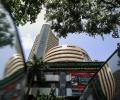
The S&P BSE 500 index, which accounts for 94% market capitalisation of BSE listed companies, has gained 45% from its March 24 low. However, out of the BSE 500 index stocks, 225 have underperformed the index by gaining less than the broader index during this period.

As a result, the deadline for filing June quarter results ends on August 15. However, only 1,538 companies out of the 4,000-odd listed firms managed to declare their results within the usual deadline.

China is the world's second-largest - both in terms of GDP and m-cap. At $10 trillion, its m-cap is second only to the US at $38 trillion.

Among the lot, Rallis India, Escorts, Jubilant Life Sciences, and Crisil added half of the total gains made in the ace stock-picker's portfolio.
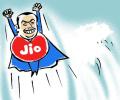
The COVID-19 pandemic and the ensuing lockdown may have put the best of funds on a backfoot of deal activity, RIL, however, has been an outlier. With 10 different investors brought in for its telecom venture Jio Platforms, RIL undertook 12 different transactions since April this year.

Experts say, investors will be better off exiting them at higher levels and investing in stocks of fundamentally sound companies.
Currently, the investor and his family's net worth in listed firms stands at Rs 8,517 crore, compared to Rs 8,388 crore as of March 31, 2020.

The S&P BSE Small-cap index has recovered 26 per cent as compared to a 23 per cent rise in the S&P BSE Sensex.
Titan, NCC, Delta Corp, Karur Vysya Bank, Aptech, and Jubilant Life Sciences are among stocks in Jhunjhunwala's portfolio that have taken a severe hit, falling more than 50 per cent during the period.
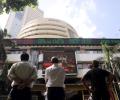
The bulk of the erosion in terms of value took place in India's most-valued firms. For instance, Mukesh Ambani-led Reliance Industries alone has lost Rs 3.8 trillion in m-cap, followed by HDFC Bank, which has seen its value erode by Rs 2.45 trillion and Tata Consultancy Services (TCS), which has lost Rs 1.85 trillion to stand at Rs 6.24 trillion, making it India's most-valued.
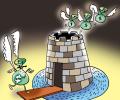
While a coordinated aggressive monetary easing from the central banks is most likely to offer some respite in the near-term, it is unlikely to improve the sentiments.

With an m-cap of Rs 31,744 crore, IRCTC stood at 96th position in the overall market capitalisation ranking, the BSE data shows.

An analysis of S&P BSE 500 companies suggests that promoters of Indian private-sector companies in particular could end up paying at least 20 per cent more as additional tax on the same dividend income.

In the past two months alone, four companies have garnered a cumulative Rs 22,400 crore via this route.

Out of 11 companies that got listed in 2019, nine have outrun the market by gaining more than 10 per cent against their respective issue price.

Session-wise data indicates small investors have taken money off the table in more sessions than they have pumped in additional capital.

Despite the 3 per cent gain in September 2019, the FPI sell-off during the quarter has seen the benchmark indices - the S&P BSE Sensex and the Nifty 50 register negative returns in Q3CY19.
Titan accounted for 59.6 per cent of his disclosed portfolio at Rs 8,355 crore. This is more than 10 times the next biggest holding, Federal Bank, at Rs 619 crore.
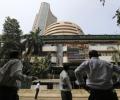
After turning net buyers for the fifth straight month till June, foreign portfolio investors (FPIs) withdrew a net of Rs 11,743 crore ($1.7 billion) in July. This was their highest outflow since October 2018.

Over the past one-and-half years, the number of stocks trading below their respective face value has increased 29 per cent after a sharp correction in stocks of small-cap companies.
 © 2026 Rediff.com - Investor Information - Advertise with us - Disclaimer - Privacy Policy - Sitemap - Feedback - About us - Terms of use - Grievances